
Gather Me, Man
I know the Black men I am being told do not exist.

Welcome to Witness, a reader-supported publication where I write in the traditions of Black resistance, survival, and truth-telling in an age of artistic and political suppression, and rampant deception. If you find something of value here, please consider becoming a paid subscriber if you can afford to do so (and if you do, leave a little note as to why you did so). I know times are hard as fuck since Trump and MAGA’s policies have raised costs and prices across the board for those of us who aren’t wealthy. So, if you can’t, you can’t; I understand. I still appreciate you and I’m still glad you’re here. Thank you.

“It is dangerous to be an American Negro male. America has never wanted its Negroes to be men, and does not, generally, treat them as men. It treats them as mascots, pets, or things.”
— James Baldwin, “Is A Raisin in the Sun a Lemon in the Dark?” Tone magazine (April 1961); The Cross of Redemption: Uncollected Writings (2010)
I. The Pieces We Are
Be appalled. Be filled with sadness and rage. Be prepared. But do not be surprised.
In some way, shape, or form, Black men and boys have always been asked to present proof that we belong where we are, that we deserve to continue breathing. During antebellum slavery, Black people had to have letters from plantation owners stating that they had permission to be out of the fields and on the roads or in the towns. Even then, the note’s authenticity could be questioned and the Black person, especially Black men and boys, could be subject to a whipping, a hanging, or worse. During Jim Crow, white people created vagrancy laws that criminalized and re-enslaved any Black person, especially Black men and boys, who stood on a corner, slept in the woods, wandered around freely, had no place to go, or who gathered in groups of three or more.
In the modern era, white people created stop-and-frisk policies that marked Black people, especially Black men and boys, as suspects for having the nerve to exist in public. I was stopped and frisked once. I was a graduate student at the time. A Latina cop lied and said that I was riding my bicycle on the sidewalk even though I was walking alongside the bicycle on the sidewalk. She was actually looking at me as I walked beside my bike and said that I was on top of it. Her lie was so blatant, so bold that it startled me and made me begin to question if there was something wrong with my perception. It seemed so rote for her to lie like that, like she had done the exact thing thousands of times and had become professional at it. In broad daylight, in front of dozens of other eyes, she attempted to rewrite and force her false reality onto me as a good reason for her injustice.
I could tell that she had the same distorted and lurid view of Black men that everyone else does, and she had to make me match her psychosis so that her cruelty made perfect sense to a psychotic world. At the side of a white-brick church—on Malcolm X Boulevard of all places—she put her hands on me in inappropriate ways. Using the cloak of official business, she grabbed the private parts of my body that under any other circumstance would have earned me the right to retaliate with violence. They always seem to think that it is funny to say to a Black man, What’s this?, as they fumble around between his legs, thinking sexual abuse can be a compliment if they appeal to phallic pride. The goal is actually more heinous: The humor masks their attempt to ensure that these particular acts do not make it onto the official record and are, therefore, not reflected in the statistical data.

That church is no longer there. Gentrification replaced it with luxury condos. But whenever I walk past that area, I can still see the phantom images of my astonishment and her assault on my body. Her weird smile as her lips pulled toward a corner of her face. Something devious narrowing her eyes. But her chin raised because she knew that her gun and the six other officers she summoned were keeping her safe from the consequences of her actions. After it was determined that I was not a threat and after I was issued a citation that was eventually dismissed, all I wanted to do was get back to the house and take a shower, scrub the filth and ick of her violating touch from my skin.
This country has been telling me what it thinks of me my entire life. It has been telling me, in infinite ways, that it does not think much of me at all; and what it does think is not fit for consumption. That is why if you ask me about what happened to young Karmelo Anthony, I will tell you that it is the quintessential American tale.
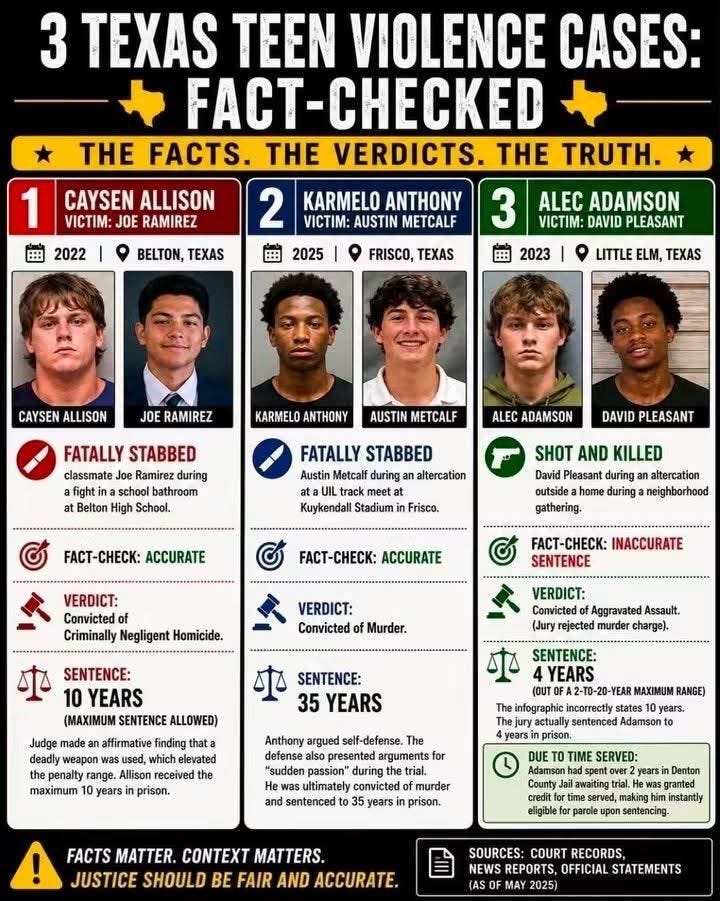
A Black boy protects himself against a white mob resulting in the death of one of those white mobsters and the system unleashes itself onto the Black boy. The system does what it is designed to do. And what the system expected of Karmelo was for him to allow himself to be murdered; to be rolled up in a gym mat like Kendrick Johnson was, so that the school administrators, or whomever, could insult the intelligence of anyone with a lick of sense and say that he leapt into the mat to retrieve his sneakers (because, they reasoned, you know how much niggers love their sneakers), got stuck, and suffocated; therefore, his death was his own fault.
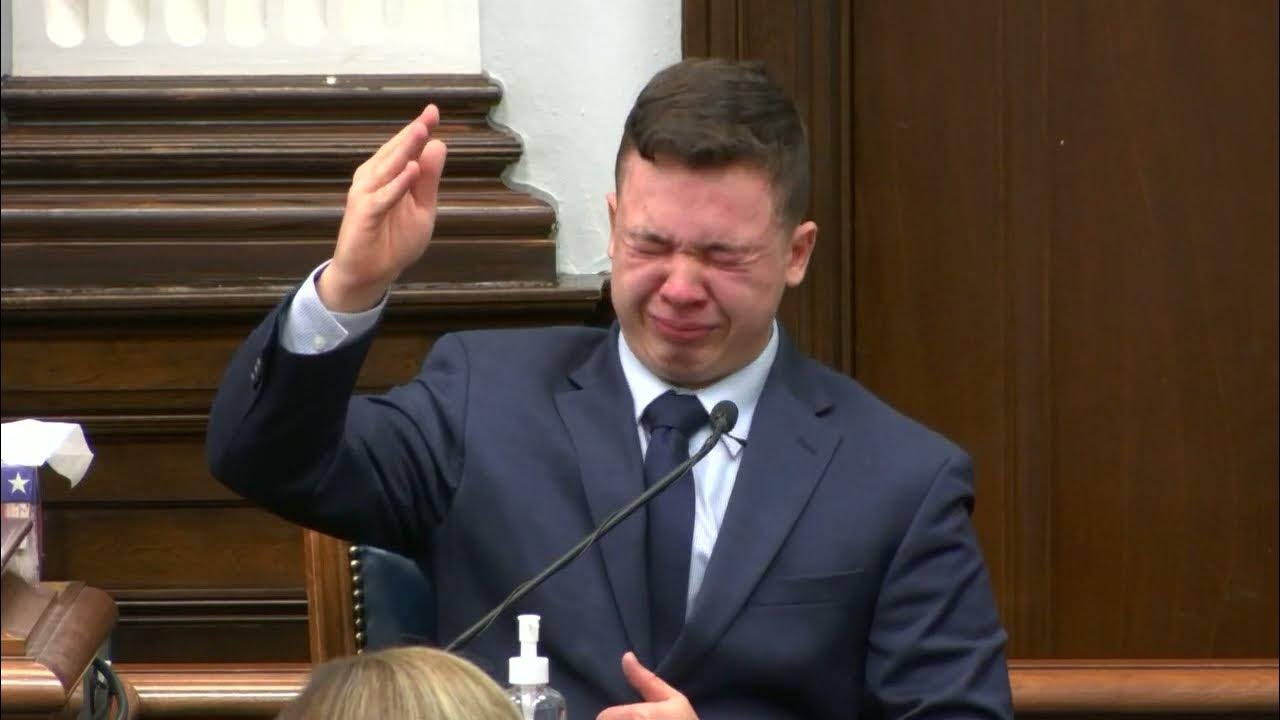
Many feel the need to compare Karmelo’s situation to situations involving white perpetrators, like Kyle Rittenhouse for example, operating under the assumption that the country is capable of seeing Karmelo as a human being rather than as an animal to be put down. Yes, Kyle Rittenhouse went to a peaceful Black Lives Matter protest with the intent of killing protesters because he disagreed with what they were protesting against. Yes, he shot and killed two unarmed protesters with a rifle he carried across state lines. Yes, he was arrested. Yes, he went to trial. Yes, he got on the stand and ugly-cried crocodile tears. Yes, it worked. Yes, a jury found him not guilty of crimes he actually committed. And yes, he now tours the country and makes a shit-ton of money from speaking engagements hosted by MAGA cult members in which he explains, better than Annalise Keating, how to get away with murder.
But the comparison is foolhardy. It is reckless because the person comparing the situations is operating from the assumption that logic can reach or sway a white supremacist. The comparison fails not because Karmelo’s humanity is questionable, but because a white supremacist’s is. Whiteness—which is not necessarily a physical characteristic (and certainly cannot be reduced to mere skin pigment), but is most definitely psychological and manifests, as James Baldwin once said, in the choices we make—will always uphold the sociopathy of people like Kyle because it shares it; game recognize game. Whiteness will always reject Karmelo’s personhood because it is does not have the acumen to perceive it. The birthright and tradition of white supremacy is such that it will always be hypocritical in its application and duplicitous in its understanding of law and order based on whether the offending person is someone it can recognize as living.
Even when you point out their double standards to them, they will always stand firm in their contradictions. With an infantile, but effective, I-know-you-are-but-what-am-I strategy, they will accuse you of being the hypocrite. They will bat away your entreaties. They will ignore all good faculties. They will use whatever excuses come to mind, even if they do not make any sense, to either explain or justify their duplicity. Or: They will try, through propaganda and repetition, to gaslight you into thinking that their warped view of reality is righteous. They do this because they believe it is the right of the conqueror and they like to keep the conquered on the defensive.
